
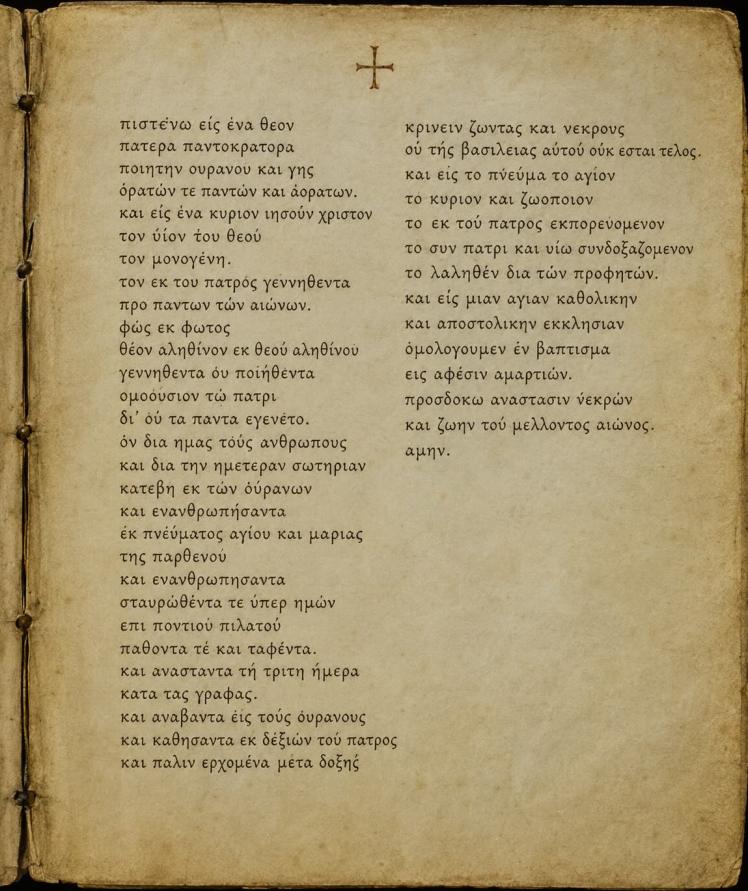
A doctrine of the Trinity does not appear in the Hebrew scriptures, which centre on the oneness of God: “Hear O Israel: The LORD is our God, the LORD alone” (Deut 6:4 NRSV). The New Testament writers did not clearly explain how the Trinitarian unity of Father, Son, and Spirit preserved the oneness of God. To address this and some heresies, theologians drew on Scripture, logic, and philosophy to articulate the nature of God in the Nicene Creed of 325. This creed became a foundational statement of faith that evolved over the ensuing decades. A creedal formula recorded by Epiphanius of Salamis (c.310-403) in his Ancoratus in 374 is, almost word-for-word, the one ratified by the Council of Constantinople in 381, and later affirmed by the Council of Chalcedon (451). This essay examines the fluidity of the Nicene statement of faith in the decades after the Council that became the creed of Epiphanius.
Here is the link to the creeds of Epiphanius in the online Christian Classics Ethereal Library: https://www.ccel.org/ccel/schaff/creeds2.iii.i.xii.html

